
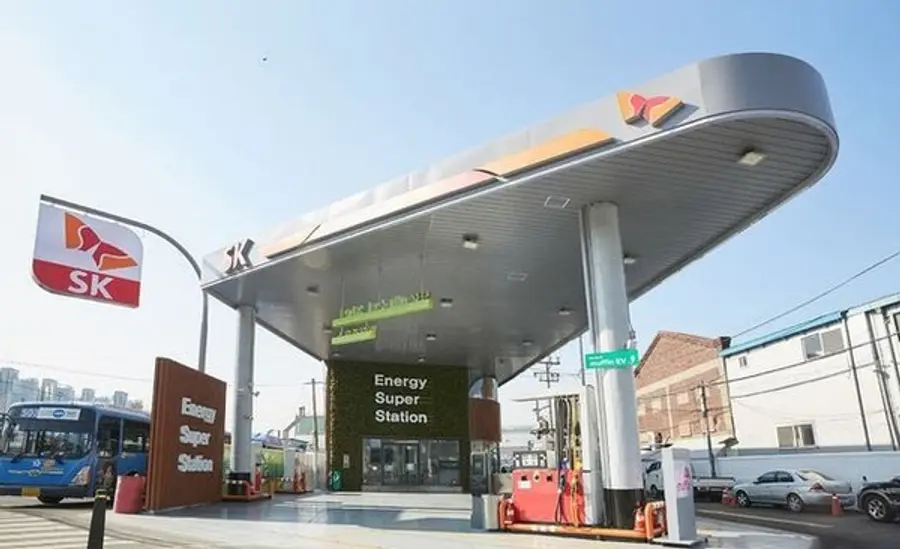
The first Energy Super Station, a future vehicle charging infrastructure where electric vehicles can be recharged with the electricity generated at the station, has started operation.
Located in Geumcheon-gu, Seoul, Bakmi Gas Station (SK Energy) directly generates electricity from 300 kW of fuel cells and 20 kW of solar power and provides electric vehicle charging services by building two electric vehicle chargers - super speed (350 kW) and fast (200 kW).
Energy Super Station, which started operation on the same day, is a "future vehicle charging infrastructure that directly produces electricity" by installing distributed energy such as solar and fuel cells and electric vehicle chargers at existing gas stations and LPG charging stations.
The Ministry of Trade, Industry and Energy expects to present the direction of the response of fossil fuel-based gas stations and LPG charging stations in the era of mobility large transformation and ease the burden of additional power plants and system investment due to the expansion of electric vehicles.
Vice Minister of Trade, Industry and Energy, Park Ki-young, Yoo Yeon-sik, head of the Seoul Climate Environment Headquarters, Chung Dong-chae, head of the Korea Petroleum Association, and Oh Jong-hoon, CEO of SK Energy, attended the opening ceremony of the first energy superstation at 4 p.m. on February 9.
□ The progress and future plans of "Energy Superstation".
This energy superstation was recognized for the installation of fuel cells in gas stations through several consultations between the Ministry of Trade, Industry and Energy, the Fire Agency, and SK Energy in May last year, and installed a 300 kW fuel cell in January this year through cooperation with ministries.
In addition, with government support, rapid and ultra-fast chargers have been built to become "energy superstations" with distributed e and electric vehicle charging infrastructure.
The Ministry of Industry and Energy plans to spread the model nationwide based on the successful operation of the first energy superstation.
To this end, it will continue to improve regulations such as installing fuel cells and limiting the distance between electric vehicles in gas stations and LPG charging stations and support for building electric vehicle chargers, financial support for distributed energy installation, and platform and technology development for stable charging station operation.
Vice Minister Park Ki-young said, "Energy superstations that provide charging services while making electricity are very beneficial because they can achieve two goals together: stable power supply and smooth electric vehicle spread. We hope that energy superstations will expand to respond to electric vehicles and become energy bases in the region.”
Reported by Smart City Today


![[토큰경제학] 엔비디아의 다음 돈줄은 GPU가 아니라 메모리다](https://cdn.www.smarttoday.co.kr/w400/q75/article-images/2026-06-10/b8779f99-0e61-4370-ab4d-d84e450ee10e.jpg)
댓글 (0)
댓글 작성
댓글을 작성하려면 로그인이 필요합니다.
로그인하기