
[Smart City Today]
The number of temporary driving permits for self-driving cars is 258, up more than 100% from 127 in 2020.
The number of pilot zones has also increased to 14, including ▲ Seoul (Sangam-dong), ▲ Sejong City (BRT section between Osong Station and Sejong Terminal, 22.4km of Sejong BRT circulation route, 22.9km to 1~4km of living area, about 25km2), ▲ Gwangju (Gwangju-gu), ▲ Daegu (Suseong Alpha City, Technopolis and Daegu National Industrial Complex, Industrial Complex Road), ▲ Jeju (Jeju International Airport and Jungmun Tourist Complex (38.7km) and 3㎢ in Jungmun Tourist Complex), ▲ Pangyo, Gyeonggi-do (part of Zero City)
It is expected that autonomous driving vehicles will be operated in Gangnam and Cheonggyecheon Stream areas by the end of this year.
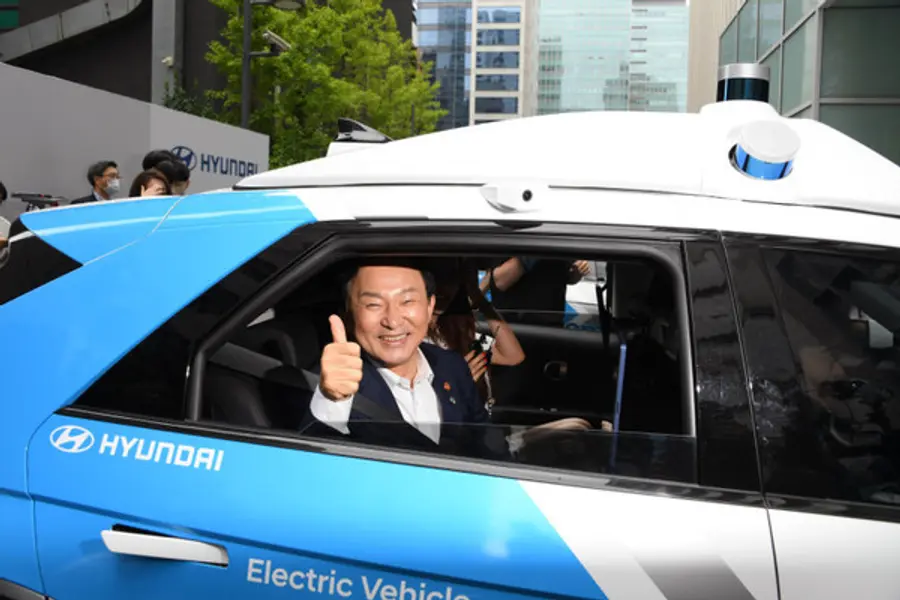
The Ministry of Land, Infrastructure and Transport (Minister Won Hee-ryong) announced recently that it will establish and operate a weekly traffic safety training course for self-driving car test drivers (safety management personnel) to prevent safety accidents caused by self-driving car test operations.
Self-driving car test drivers are those who check driving conditions and normal operation inside and outside autonomous vehicles and take emergency safety measures, and the Ministry of Land, Infrastructure and Transport has secured safety by designating test drivers and imposing management obligations for safe driving.
The curriculum is expected to strengthen self-driving stability by further enhancing test drivers' expertise and ability to cope with situations even in the face of the recent increase in self-driving cars, such as an increase in the number of temporary driving permits above Level 4 and the expansion of self-driving pilot zones.
Park Ji-hong, an automobile policy officer at the Ministry of Land, Infrastructure and Transport, said, "As the number of autonomous vehicles is expected to continue to increase, it is important to improve the safety awareness of test drivers along with securing vehicle safety."


![[토큰경제학] 엔비디아의 다음 돈줄은 GPU가 아니라 메모리다](https://cdn.www.smarttoday.co.kr/w400/q75/article-images/2026-06-10/b8779f99-0e61-4370-ab4d-d84e450ee10e.jpg)
댓글 (0)
댓글 작성
댓글을 작성하려면 로그인이 필요합니다.
로그인하기