
The mid-to-long-term plans will be promoted to provide smart transportation services, such as accepting new means of transportation such as self-driving cars using artificial intelligence and big data, establishing intelligent transportation system infrastructure, and providing customized transportation services for various users.
The Ministry of Land, Infrastructure and Transport (Minister Roh, Hyung-wook) announced that "Basic Plan 2030 for Intelligent Transportation Systems." was confirmed at a Cabinet meeting presided over by the Prime Minister on the 19th.
The "Basic Plan 2030 for Intelligent Transportation Systems" was established with the vision of "providing eco-friendly, safe and people-centered transportation services" as the target year of 2030.
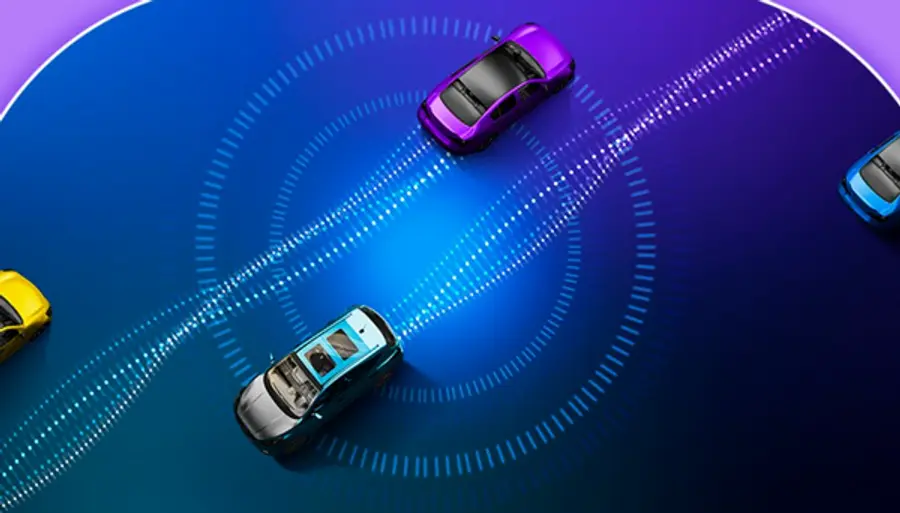
The existing intelligent transportation system only delivered one way to users after transportation facilities collected information on transportation methods such as automobiles. In the future, it will be possible to increase the accuracy of the information collected and provided in real-time through complex and interactive communication between transportation facilities and means by utilizing advanced technologies such as artificial intelligence and the Internet of Things (IoT).
Intelligent Transport System (ITS) improves the quality of traffic flow and improves traffic safety by applying advanced technology to transportation and facilities such as automobiles and roads.
The "Basic Plan for Intelligent Transportation System" is a 10-year plan under the "National Integrated Transportation System Efficiency Act". As a strategy to develop and distribute intelligent transportation systems for each sector of automobiles, roads, railroads, aviation, and sea, the third plan was established following the first plan in 2000 (intelligent transportation system 21) and the second plan in 2011 (intelligent transportation system 2020).
The main contents of the "Basic Plan 2030 for Intelligent Transportation Systems" are as follows.
■ Establishing the infrastructure for the introduction of new future transportation
It will establish infrastructure for the smooth introduction and activation of new means of transportation such as self-driving cars and Urban Air Mobility (UAM).
In preparation for the commercialization of Lv.4 in 2027, C-ITS communication infrastructure will be established on major roads (highways, etc.) nationwide. For reliable information exchange between vehicles and infrastructure centers, a V2X security certification system will also be established to support the smooth operation of autonomous vehicles.
The communication method of the C-ITS communication infrastructure will demonstrate the LTE-V2X method, and after the Dual Mode (WAVE+LTE-V2X) pilot project on major highways, a single standard will be set and implemented nationwide (from 2024).
It will also establish standards for the structure of boarding facilities and various facilities for UAMs characterized by vertical takeoff landing in the city center. In addition, for safe and efficient operation in the city center, a three-dimensional map of the city center is established to prepare for full-scale use of UAM.
■ Advanced technologies such as artificial intelligence to eliminate traffic safety blind spots
In order to strengthen traffic safety in major transportation facilities, an integrated safety management system will be established.
Smart CCTV monitoring systems with artificial intelligence that detect unexpected situations such as reverse driving will be expanded to major sections. Road traffic safety will be strengthened by establishing a road condition management system that provides dangerous information to drivers by detecting real-time road conditions (freezing, etc.) and obstacles (falling rocks, etc.).
Smart railroad crossings will be built first in 200 places with high traffic volume by 2025 to prevent railroad crossing accidents, by introducing an electronic warning system that judges traffic flows and self-determines dangerous situations and establishing a linkage system with adjacent road traffic signals.
■ Groundwork to provide customized services for users
It supports convenient and efficient movement by reflecting the characteristics of users' demands.
It will develop an indoor positioning system that collects user behavior data from indoor and underground locations by 2023 to provide customized guidance services for railroad users, such as providing travel route guidance services for individual railroad users.
Based on artificial intelligence, customized virtual assistant services that provide optimal travel routes from home to airport boarding will be implemented on mobile, and by expanding the introduction of autonomous and follow-up passenger luggage transportation cart robots (~2025), the convenience of air transportation will be improved through the construction of smart airports.
■ Support for overseas expansion of domestic intelligent transportation systems
In connection with the ODA project, it will support overseas exports of railway operation and safety management technology and create a Korean ITS export ecosystem by supporting domestic companies related to marine digital technology such as intelligent maritime traffic information services.
The "Basic Plan 2030 for Intelligent Transportation System" is scheduled to be officially announced in October and plans to be established and implemented annually along with basic plans for intelligent transportation in each sector such as of automobiles, roads, railroads, aviation, and sea.
Ahn Seok-hwan, a Director-General for Comprehensive Transport Policy at the Ministry of Land, Infrastructure and Transport, said, "This establishment of a basic plan is expected to upgrade the transportation system in Korea so that people can move more safely and conveniently from their departure to destination. We will carry out detailed tasks in the basic plan without a hitch in each field so that the advanced transportation system that the people imagined can be realized."
Reported by Smart City Today


![[토큰경제학] 엔비디아의 다음 돈줄은 GPU가 아니라 메모리다](https://cdn.www.smarttoday.co.kr/w400/q75/article-images/2026-06-10/b8779f99-0e61-4370-ab4d-d84e450ee10e.jpg)
댓글 (0)
댓글 작성
댓글을 작성하려면 로그인이 필요합니다.
로그인하기