
Gyeonggi Province is planning to expand the DRT (Demand Responsive Transportation) project in earnest this year.
Gyeonggi Province announced on August 9 that it will expand the Gyeonggi-do DRT project based on the achievements of the DRT pilot project that has been promoted since December last year.
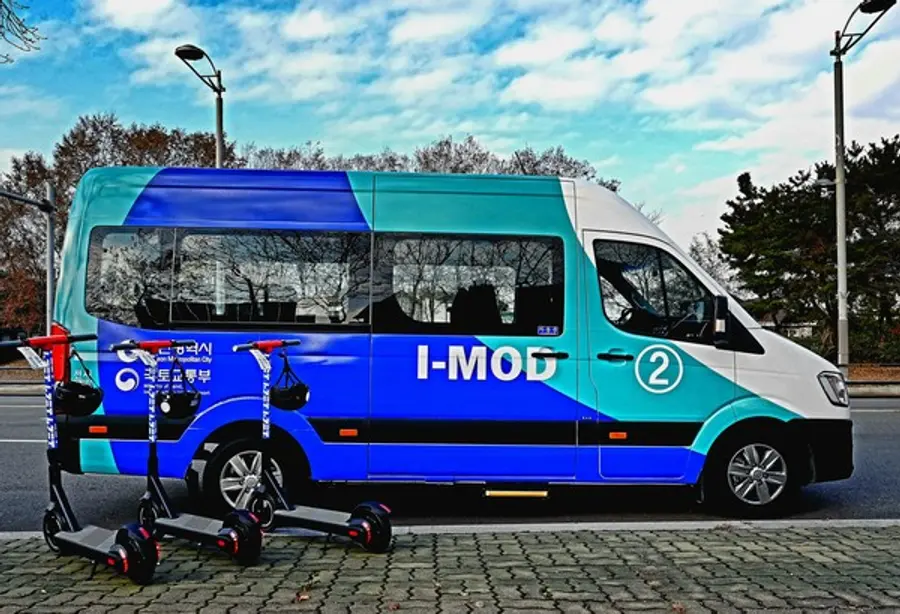
This year's "DRT" project, which refers to a demand-response bus business in this case, is a new concept of transportation service that flexibly transports passengers in response to calls without fixed routes and a set operation schedule, and uses AI technology to create and operate optimal routes in real-time according to actual passenger demand.
Gyeonggi Province has been pushing to introduce DRT for areas where traffic demand is not fulfilled with existing transportation systems such as new cities district 2·3 and rural areas.
Since December last year, the pilot project has been carried out for Paju Unjeong Districts 1, 2, and 3 and Gyoha Districts, and 130,000 people have used it so far, and 79% of the respondents said they are "satisfied" with the trial transportation system.
Based on these results, Gyeonggi Province conducted on-site inspections of cities and counties in January to expand the DRT project, and selected seven cities and counties (Suwon, Yangju, Goyang, Hanam, Pyeongtaek, Ansan, and Hwaseong) as preliminary targets, and applied for regulatory sandboxes for DRT operation on May 31.
Currently, the DRT project under the Passenger Automobile Act can only be operated in rural areas or in areas lacking public transportation, because it is necessary to apply special regulations through the application of regulatory sandboxes in new cities that do not fall under this.
Gyeonggi Province will introduce DRT first as soon as the Ministry of Land, Infrastructure and Transport approves the seven cities that applied for regulatory sandboxes in the second half of this year.
In addition, the government will also conduct a demand survey on the DRT project site in 2022-2023 for 31 cities and counties in the province over two weeks from August 8 to 19.
In the second half of this year, the city and county that announced their intention to participate through the judging committee of the project site will select the area suitable for DRT operation and plan to expand the business. The main selection criteria are DRT operation suitability (such as traffic status), business promotion plan, and business investment plan.
For the additional selected cities and counties at the judging committee for the project, the government plans to expand DRT operations after taking administrative procedures such as applying for additional regulatory sandboxes in the first half of 2023.
“Some residents are experiencing a lot of inconveniences not only because of their departure and departure to Seoul but also because of lack of buses in the area,” said Park No-geuk, director of transportation at Gyeonggi Province. “The expansion of the DRT project is expected to allow residents to move to their desired destinations anytime and anywhere easily and freely.”
Reported by Smart City Today


![[토큰경제학] 엔비디아의 다음 돈줄은 GPU가 아니라 메모리다](https://cdn.www.smarttoday.co.kr/w400/q75/article-images/2026-06-10/b8779f99-0e61-4370-ab4d-d84e450ee10e.jpg)
댓글 (0)
댓글 작성
댓글을 작성하려면 로그인이 필요합니다.
로그인하기