
The National Museum of Korea will present smart exhibition halls.
I-Bricks (CEO Chae Jong-hyun), a Korean language processing company, announced on June 13 that it has been selected as a final contractor for the service project for a smart exhibition hall without barriers of the National Museum of Korea (Director Min Byung-chan).
The Project of Smart Exhibition Center Service without Barriers is the Digital Public Service Innovation Project (Specialized Institution: Korea Intelligence and Social Promotion Agency) of the Ministry of Science and ICT.
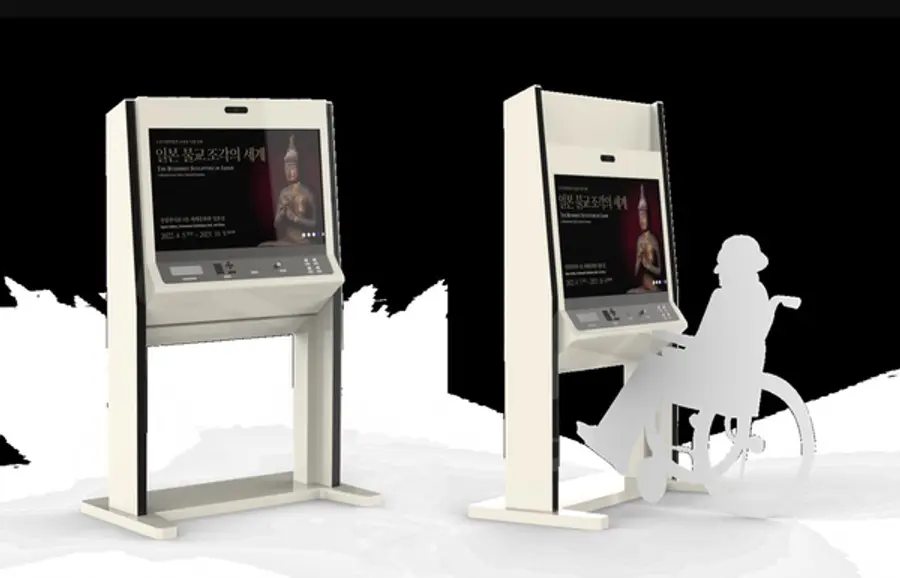
Through this project, the National Museum of Korea plans to implement a barrier-free intelligent kiosk system to provide viewing services so that vulnerable groups (city, deaf, elderly, etc.) can freely receive exhibition guidance without helpers.
The project's main focus is developing customized guidance content for the disabled by introducing new barrier-free kiosks, building customized commentary content based on artificial intelligence (AI), developing mobile services, developing intelligent sign language movements with voice recognition and synthesis models, and building artificial intelligence learning data.
I-Bricks will analyze the type of visitors and the status of service using the data held by the National Museum of Korea and develop the service plan for each visitor to implement the AI-based barrier-free kiosk.
For example, selecting a floor-by-floor exhibition hall displayed on a barrier-free kiosk will explain the main artifacts of each exhibition hall. Without searching the menu, the desired information is inquired in various ways (sign language, voice, braille, text, etc.) and provided answers with images, texts, voices, and sign images.
AI-based barrier-free kiosks will also provide customized theme viewing recommendation services.
If you take a picture of the recommended route QR code provided with interaction-based information services by target (sight/hearing disabled, children, etc.), subject (planning exhibition, special exhibition, etc.), and time, you can immediately check the recommended route information on mobile.
People with disabilities can use exhibition information services based on the visiting journey while moving to the museum by referring to the recommended movement information they received.
In addition, by utilizing the museum's high-definition image to provide 3D preview contents for amblyopia, visitors can expand relics and find detailed information in kiosks without having to visit individual exhibition halls.
When the project is completed later this year, the accessibility of disabled people visiting the National Museum of Korea is expected to improve significantly.
It is expected to contribute to enhancing self-efficacy by creating an efficient exhibition viewing environment with kiosks and individual devices and expanding cultural enjoyment opportunities for the vulnerable by providing disabled-friendly content.
“I-Bricks has won this project thanks to the success of cultural institutions for the past five years (11 other museums, including the National Museum of Korea) through the intelligent cultural information curating bot business,” said the business director of I-Bricks. “We will make every effort to complete the project as we have laid the foundations for services that people with disabilities can actually use and experience, such as providing information on sign language on major exhibits based on artificial intelligence.”
Reported by Smart City Today


![[토큰경제학] 엔비디아의 다음 돈줄은 GPU가 아니라 메모리다](https://cdn.www.smarttoday.co.kr/w400/q75/article-images/2026-06-10/b8779f99-0e61-4370-ab4d-d84e450ee10e.jpg)
댓글 (0)
댓글 작성
댓글을 작성하려면 로그인이 필요합니다.
로그인하기