
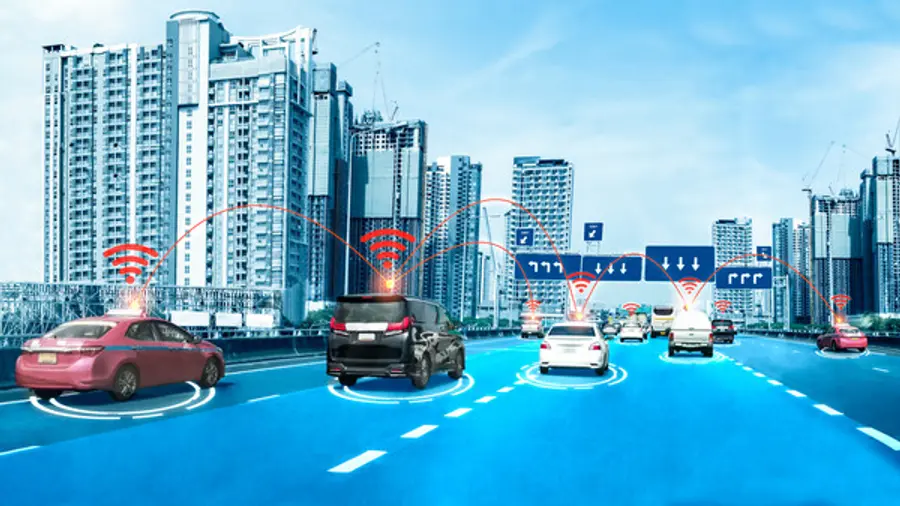
C-ITS, the next-generation intelligent transportation system, will be built on major roads nationwide by 2025. Demonstration zones for self-driving cars will also be expanded. In addition, budget support will be increased to promote the early commercialization of autonomous driving by private companies.
The Ministry of Land, Infrastructure and Transport (Minister Roh, Hyung-wook) announced that it has prepared the first basic plan for autonomous driving-based transportation logistics for the next five years ('21~'25) to develop and spread self-driving vehicles and transportation logistics system, and finalized it after deliberation by the National Transportation Commission.
The government has recently promoted the establishment of a mid to long-term basic plan for the commercialization of autonomous driving vehicles and the fast introduction of autonomous driving-based transportation logistics systems, in order to respond to the trend that countries around the world are competing with the introduction of autonomous driving-based transportation logistics systems such as self-driving shuttles, taxis, and delivery.
The finalized plan includes a vision of opening the era of commercialization of autonomous driving-based transportation logistics systems in 2025 and a strategy for providing services at major hubs on national highways, cities, and provinces by 2025. To achieve these goals, the government will strengthen support for all stages of "technology development-verification-commercialization" of self-driving-based services, enhance technology availability and create a new industrial ecosystem by strengthening self-driving safety.
<3 Goals>
① Provides self-driving commercial services at major hubs across the country's highways and provinces
② Technology Development of Autonomous Driving Service (10 or more types)
③ Completion of system and infrastructure base for commercializing autonomous vehicles and upgrading services
The Ministry of Land, Infrastructure and Transport has also come up with five major strategies to realize the basic plan for autonomous traffic logistics.
◆ Strategy 1: Advancement of technology for self-driving traffic logistics services
▷Secure technology for autonomous driving passenger, cargo and social-based services.
▷Develop passenger services such as autonomous driving-based public transportation, transportation-specific services for mobility handicapped, freight vehicle clustering services, and autonomous driving city delivery services, and boost technology for social-based services such as road monitoring, emergency recovery and patrol for autonomous driving support and safety.
◆Strategy 2: Creation of a Demonstrative Environment for Autonomous Driving Transportation Logistics Service
▷Running of the demonstration operation district and the regulatory free zone, and promotion of the advancement of self-driving testbeds such as K-City will be expanded.
▷The pilot zone for autonomous driving vehicles for paid demonstration of autonomous driving-based service will be continuously expanded and service demonstration and regulatory maintenance through Sejong and Gwangju regulatory free zones will be executed.
▷In order to support the testing and research of Level 4 autonomous driving vehicles, it plans to upgrade the testbed facilities and provide research space for resident enterprises in the testbed to support technology development and demonstration.
◆Strategy 3: Creation of Business Environment for Autonomous Driving Transportation Logistics Service
▷In order to introduce autonomous driving-based services nationwide, road and communication infrastructures necessary for autonomous driving will be built and a management system for service bases such as data and platforms will be established.
▷Considering the introduction of autonomous driving vehicles and next-generation intelligent transportation systems (C-ITS), road design and operation standards will be reestablished. Also, technology and services for dynamic maps in which road traffic change information is quickly updated will be developed.
▷C-ITS, the next-generation intelligent transportation system, will be built on major roads nationwide by 2025, and various safety services through C-ITS will be upgraded.
▷A common platform for standardization of autonomous driving data and big data management will be developed, and an evaluation and feedback system for service providing platforms to secure quality and diversity of service provision will be established.
◆ Strategy 4: Strengthen self-driving safety and improve technology acceptance
▷In order to ensure the safety and reliability of autonomous driving vehicles, safety technology will be upgraded, and the international harmony of safety standards will be established and social acceptance of autonomous driving technologies will be improved.
▷Standards and testing methods for driving, collision, communication, and system safety evaluation of level 4 self-driving cars will be prepared, and cybersecurity and safety accident response systems such as hacking prevention will be established.
▷A roadmap for international coordination of safety standards and personal information protection guidelines (guidelines) to improve technology acceptability from the perspective of users will be made.
◆ Strategy 5: Establishment of Self-driving Traffic Logistics Ecosystem
▷Global competitiveness will be secured through the activities such as international joint research on autonomous driving-based transportation logistics systems and the support for companies to create a sustainable industrial ecosystem will be expanded.
▷International joint research and exchange programs for research personnel will be operated, and cooperation systems between testbeds will be strengthened so that overseas companies can smoothly utilize self-driving testbeds from each country.
▷In order to support corporates’ growth, the Land, Infrastructure and Transport Innovation Fund and budget support for early commercialization of the private sector will be expanded.
▷The training of autonomous driving personnel will be expanded by university curriculum improvement, and the study of job response measures such as win-win model development and job conversion education will be executed.
“We will push forward the detailed tasks in the basic plan without any hitches so that the autonomous driving-based transportation logistics system, such as autonomous shuttles and delivery, will be introduced as soon as possible so that we will improve the convenience in people’s mobility and the efficiency of streamline logistics,” said Jung-hee Kim, a policy officer at the Ministry of Land, Infrastructure and Transport.
Reported by 'Smart City Today'


![[토큰경제학] 엔비디아의 다음 돈줄은 GPU가 아니라 메모리다](https://cdn.www.smarttoday.co.kr/w400/q75/article-images/2026-06-10/b8779f99-0e61-4370-ab4d-d84e450ee10e.jpg)
댓글 (0)
댓글 작성
댓글을 작성하려면 로그인이 필요합니다.
로그인하기