
[Smart City Today]
The Ministry of Land, Infrastructure and Transport (Minister Won Hee-ryong) announced that it has selected nine cities and four services as a result of the 2022 Smart City and Service Certification Contest.
Smart city certification began in 2021 to diagnose the smart capabilities of local governments and discover best practices, and evaluation was conducted by dividing it into large cities and small and medium-sized cities(Based on a population of 500,000).
As a result of reviewing 24 local governments that applied for certification, four large cities were selected, including Gimhae City and Incheon Metropolitan City, and five small and medium-sized cities were selected, including Gangneung City and Dalseo-gu (Daegu).
Smart service certification, which was first implemented this year, is a project to support the discovery and spread of highly effective services, and in this contest, certification screening was conducted for services in the transportation sector, which approvement has been great.
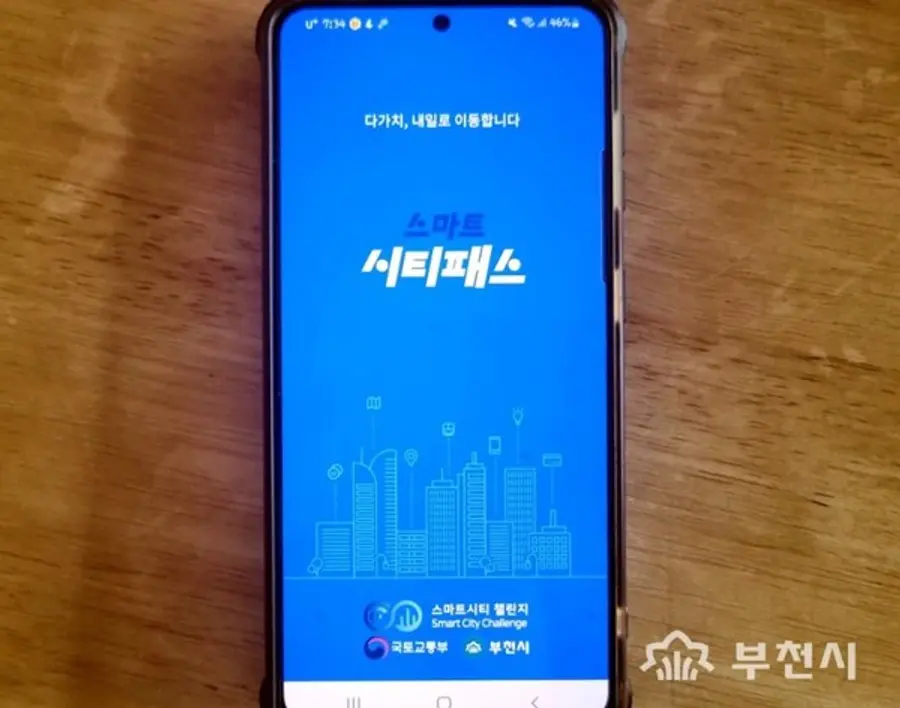
Companies applied for certification either by applying alone or by forming a consultative body with local governments, and a total of 10 services were received. As a result, four services such as "Smart City Pass (Bucheon City Council)" and "Smart Parking Service (Daeheung Information Co., Ltd.)" were certified.
The smart city certification screening was conducted by comprehensive evaluating and scoring the level of smart city services and infrastructure of local governments, related institutional foundations and promotion systems, and the expertise and innovation of citizens and local officials
Using 56 detailed evaluation indicators, certification was granted to cities with a total score of 70% or more, and the certified city will be awarded a commendation and copper plate from the Minister of Land, Infrastructure and Transport to promote it as an excellent smart city at home and abroad.
Among the large cities, Incheon Metropolitan City received the highest evaluation, and its strengths were that it has excellent infrastructure such as a smart city integrated operation center and provides various public city services such as disaster prevention, environment, and crime prevention.
In particular, to cope with the shortage of public transportation in the region, local governments, public institutions, and companies formed a cooperative system to introduce and spread services such as intelligent shared taxis and demand-responsive buses.
Unlike 2021, when only cities in Seoul such as Gangnam-gu and Guro-gu were selected, this year, local cities such as Gangneung-si and Dalseo-gu in Daegu also achieved certification.
Dalseo-gu of Daegu, which received the best evaluation, received high marks for easing congestion at major intersections using an artificial intelligence-based traffic analysis system and introducing energy management technology to local industrial complexes to create eco-friendly and high-efficiency industrial spaces.
Smart service certification used 64 indicators to evaluate the sensory effect, citizen satisfaction, level and suitability of technology and functions, and the possibility of regional spread, and like urban certification, certification was granted to services that received more than 70% of total points.
A representative example is "Smart City Pass" jointly developed by four companies, including Data-Alliance Co., Ltd., and Bucheon City, a service that integrates public transportation and various shared transportation services* in Bucheon into one app.
It received good reviews in recognition of its utility by combining transportation linked to smart city passes to support optimal route search and even supporting users' mileage accumulation in connection with the Ministry of Land, Infrastructure and Transport's affordable transportation card.
For the certified services, the Minister of Land, Infrastructure and Transport will be awarded a commendation and will support them to be designated as innovative products with benefits in the public sector procurement process.
Gil Byung-woo, an urban policy officer at the Ministry of Land, Infrastructure and Transport, said, "We were able to confirm that the level of smart cities and services in Korea is gradually increasing through the certification system.", and "We will spare no policy support such as fostering smart cities in the region and creating an ecosystem for innovative companies in order to continuously spread performance."


![[토큰경제학] 엔비디아의 다음 돈줄은 GPU가 아니라 메모리다](https://cdn.www.smarttoday.co.kr/w400/q75/article-images/2026-06-10/b8779f99-0e61-4370-ab4d-d84e450ee10e.jpg)
댓글 (0)
댓글 작성
댓글을 작성하려면 로그인이 필요합니다.
로그인하기