
The Seoul Metropolitan Government participates in the OECD Virtual Global Conference on Governance Innovation on June 16 and announces the "Seoul’s Self-Driving Digital Twin Technology."
At this meeting, Kim Kyung-tak, the Seoul Metropolitan Government's pedestrian-friendly policy officer, will present the autonomous driving simulation system combined with digital twin technology as an exemplary example of Seoul's goal of becoming a leading autonomous driving city. Discussions will be held with panels attending meetings such as the UK and Canada and OECD officials.
The OECD International Conference on Government Innovation was launched in January 2000 under the supervision of OECD STI (Science and Technology Innovation Division) and GOV(Public Governance).
The conference aims to present and discuss ways to use digital technology and government-supported innovation cases in conducting risk management and compliance monitoring.
The Seoul Metropolitan Government's presentation was planned as per the official request of the OECD, and the opening of the "Seoul Autonomous Vehicle Simulator" announced on April 28 was highly evaluated worldwide.
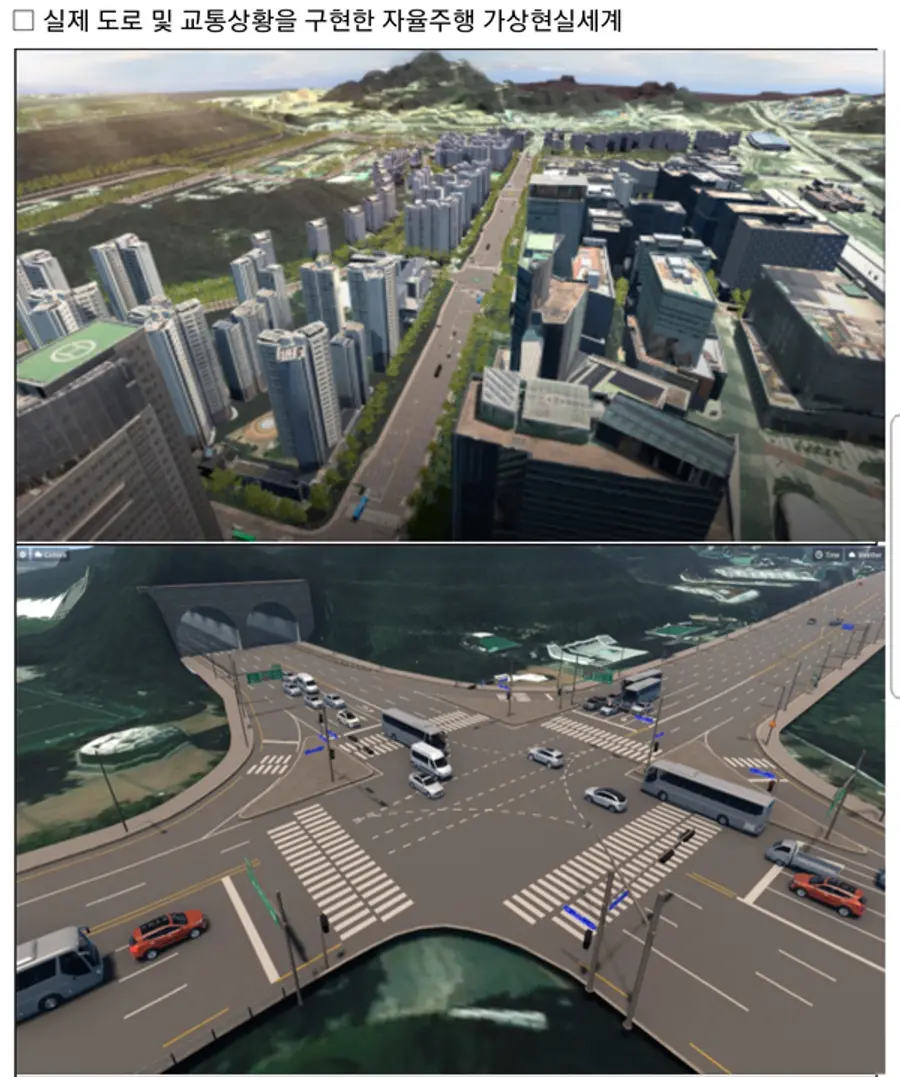
Kim Kyung-tak, a pedestrian-friendly policy officer, will introduce innovative cases that reduce costs while increasing safety and efficiency for companies by supporting autonomous vehicle simulation in virtual reality, not real roads, through digital technologies such as digital twin technology-based autonomous car simulators opened to the private sector.
The "self-driving simulator," newly introduced by the SMG, has the advantage of being able to use it immediately without the cost or time required to build data, as buildings, roads, traffic environments, and weather conditions are all implemented.
In addition, various evaluation scenarios such as ▲ change of lane according to route, ▲ avoidance of illegal parking, ▲ traffic signal recognition and stop line compliance, and ▲ blind-spot pedestrian avoidance were provided in demo form. In addition, after applying on the TOPIS, anyone can use it free of charge, which improves accessibility.
About a month after the free opening of the Seoul autonomous vehicle simulator, ▲ 4 universities ▲ 11 research institutes ▲ 16 startups (new companies) have been using it, drawing a lot of positive responses.
This is because the public has provided the opportunity to demonstrate autonomous driving technology in virtual reality considering various roads, traffic environments, and weather conditions without time and space constraints and safety accidents risk through 24-hour online as well as supporting the purchase cost of simulators, the Seoul Metropolitan Government explained.
Reported by Smart City Today


![[토큰경제학] 엔비디아의 다음 돈줄은 GPU가 아니라 메모리다](https://cdn.www.smarttoday.co.kr/w400/q75/article-images/2026-06-10/b8779f99-0e61-4370-ab4d-d84e450ee10e.jpg)
댓글 (0)
댓글 작성
댓글을 작성하려면 로그인이 필요합니다.
로그인하기