
[Smart City Today]
The number of electric vehicle chargers installed in Seoul has exceeded 35,000. It's more than quadrupled compared to two years ago. The Seoul Metropolitan Government is aiming to raise the number to 220,000, which is 10% of electric vehicles in Korea by 2026.
According to the Seoul Metropolitan Government, the cumulative number of electric vehicle chargers installed by the end of September reached 35,216. It has increased 4.2 times compared to 8,387 units at the end of 2020.
As of the end of September, there are 53,798 electric vehicles registered in Seoul, and the number of electric vehicles per electric vehicle charger is 1.53.
By type of charger installation, 2,171 units of rapid chargers were supplied to residential transportation hubs such as ▲ transfer parking lots and gas stations, 14,848 units of slow chargers were installed to places such as ▲ workplaces, and 18,197 units of outlet-type chargers to residential areas such as ▲ apartments and detached houses.
Since this year, the city has been conducting a public contest to discover the site of the charger installation through citizen applications involving citizens for the first time in the country. Since its implementation on February 14, 13,774 applications have been received in 1,212 locations in the first half and 2,266 installations in 663 locations in the second half (as of October 27).
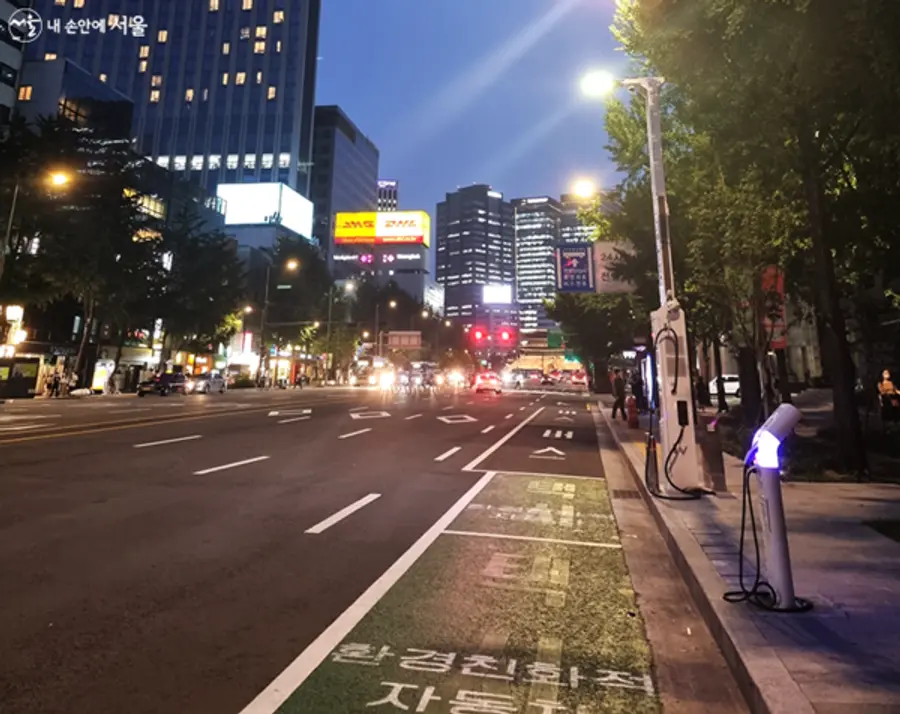
The Seoul Metropolitan Government has planned to install 30 units of streetlight-type chargers on the roadside with high traffic so that citizens can conveniently charge electric vehicles in their daily lives. It will also install 20 rapid chargers at nine LPG charging stations with good accessibility. The plan is to install a 200kW fast charger so that not only private vehicles but also taxis and freight cars can be charged conveniently and quickly.
Applications for sites to install electric vehicle chargers can be received through the representative website.
Yoo Yeon-sik, head of the Seoul City Climate and Environment Division, said, "We are considering improving the quality of the electric vehicle’s charging environment by building accessible charging stations and eliminating charging blind spots by expanding various chargers to realize the 10% era of electric vehicles in 2026." And added, "We will continue to make efforts to expand the basis for charging electric vehicles centered on the demand of citizens."


![[토큰경제학] 엔비디아의 다음 돈줄은 GPU가 아니라 메모리다](https://cdn.www.smarttoday.co.kr/w400/q75/article-images/2026-06-10/b8779f99-0e61-4370-ab4d-d84e450ee10e.jpg)
댓글 (0)
댓글 작성
댓글을 작성하려면 로그인이 필요합니다.
로그인하기