
Gwangju Metropolitan City is planning to create a self-reliant ecosystem for the " Purpose Built Vehicle (PBV)" industry to convert future cars and promote win-win development between finished cars and parts companies.
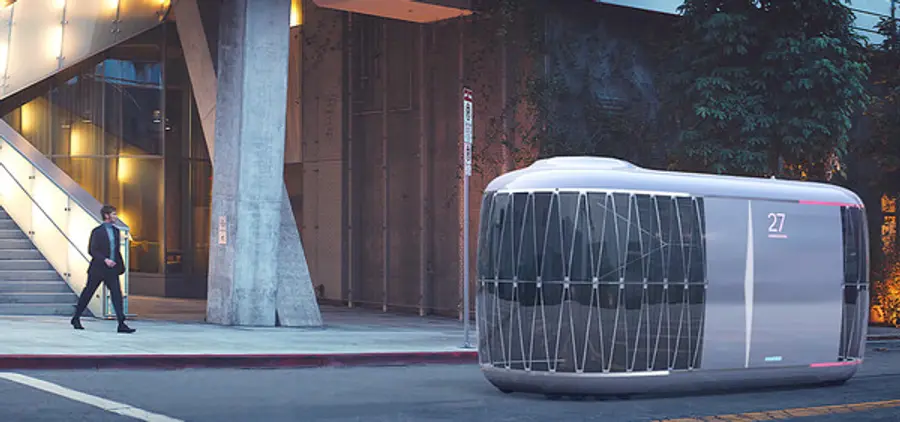
Purpose Built Vehicle (PBV) refers to eco-friendly mobile solutions such as providing various services tailored to passengers and short-range cargo transportation.
PBV is an electric vehicle-based eco-friendly transportation to support various lifestyles for the future society, and it is equipped with a perfect autonomous driving function, allowing various uses from personalized living spaces to public shuttles. Also, based on AI optimal route setting and cluster driving functions, Hyundai Motor Group predicts that it will bring innovative changes to the transportation and logistics industries and that the global PBV will increase by 33% annually to 1.3 million units by 2025.
Gwangju plans to secure 16.85 billion won by being an operator of the "demand-based partner value chain upgrade and self-reliance package" implemented by the Ministry of Trade, Industry and Energy. The Gwangju Institute of Green-Car Advancement said it plans to invest a total of 28.95 billion won by 2026 as the organizer to create a business model for the purpose-based automobile industry centered on small and medium-sized companies.
As the PBV market grows based on the expansion of the future automobile ecosystem, customized demand for customers is increasing, and the vertical supply chain for manufacturing and selling internal combustion engine cars is currently changing to a horizontal supply chain based on mobility services.
In the midst of this paradigm shift in the automobile industry, PBVs in various forms and differential levels will be released in the market from 2025, when the PBV market is expected to expand in earnest.
It plans to establish a support infrastructure for the production of PBV parts and starting cars at the online and offline joint cooperation center of parts suppliers in Bitgreen Industrial Complex and provide customized corporate support to foster PBV-related parts industries for local auto parts companies.
By discovering PBV-specific models in the region and promoting the publicaion of parts, it plans to foster PBV-specialized companies focusing on new products and new technologies to create an industrial ecosystem for future automobile companies, it will help secure sustainable growth power sources and enhance competitiveness.
In addition to the construction of infrastructure related to this project, a total of 166 types of state-of-the-art equipment, including environmental reliability equipment and electromagnetic compatibility test equipment, are connected to provide comprehensive corporate support.
Comprehensive support tailored to companies will be subdivided and carried out to meet corporate demand. Beneficiary companies will be recruited in June, including utilizing public platforms for various PBV designs, expanding the commercialization of PBV parts, securing independent technology, manufacturing PBV starting cars, test evaluation of development parts, and supporting authentication of developed PBVs.
Park Joon-yeol, head of the city's automobile industry, said, "The creation of a PBV industrial ecosystem will lay the foundation for the eco-friendly car industry and sustainable automobile industry. We will actively support PBV vehicles and core parts companies to create many high-quality jobs.
Reported by Smart City Today


![[토큰경제학] 엔비디아의 다음 돈줄은 GPU가 아니라 메모리다](https://cdn.www.smarttoday.co.kr/w400/q75/article-images/2026-06-10/b8779f99-0e61-4370-ab4d-d84e450ee10e.jpg)
댓글 (0)
댓글 작성
댓글을 작성하려면 로그인이 필요합니다.
로그인하기