
The Ministry of Science and ICT (Minister Hye-sook Lim) and National IT Industry Promotion Agency (‘NIPA’, President Chang-yong Kim) announced that they would promote the Artificial Intelligence of Things (AIoT) flagship projects.
A total of 60 coalitions with more than 300 organizations participated in the project contest, and 7 projects were finally selected in consideration of regional linkages.
The seven tasks consisted of three local-linked public schemes (6 billion won) and four leading services for productivity innovation (8 billion won). The details are as follows.
■ Local-linked public projects (3 tasks, 6 billion won)
1. AIoT based indoor air quality management system (for individuals and small business owners)
It is a system that measures air quality in real-time by indoor and outdoor sensors, and artificial intelligence controls the air sterilizer, ventilation system, and air purifier to automatically manage indoor air quality.
This system can effectively improve indoor air by providing a driving pattern optimized for the user's space and situation, and in connection with Goyang-si, it will be applied and spread to 140 places such as nursing homes, senior citizens' centers, daycare centers, and administrative welfare centers.
2. IoT applied virtual reality/augmented reality rehabilitation system (digital health management)
It is a service for vulnerable rehabilitation patients such as stroke patients, the elderly, and traumatic brain injury patients.
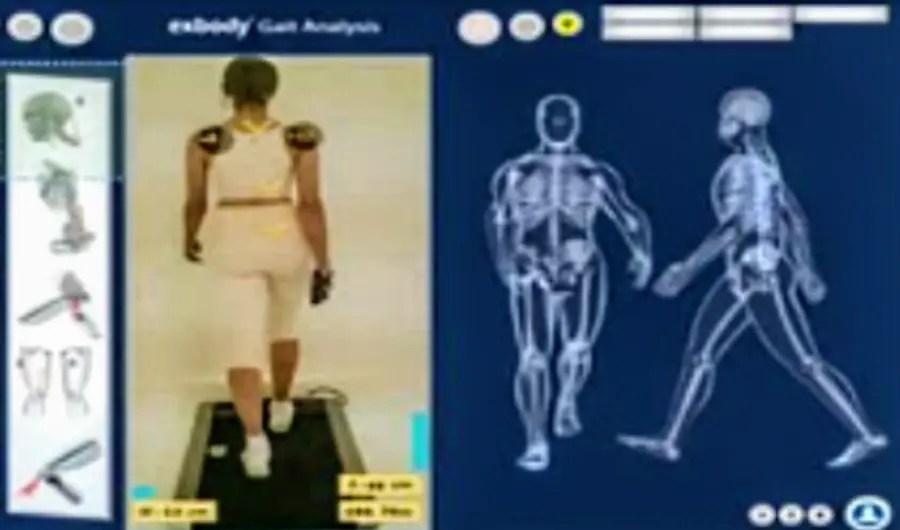
In this system, a palm-sized non-contact radar sensor and a motion recognition sensor collect biometric data such as heart rate, respiration, movement, and posture of a patient, and artificial intelligence calculates the type and time intensity of exercise that the patient needs to do, while recommends virtual reality and augmented reality rehabilitation programs.
It is expected to be able to support effective rehabilitation in nursing hospitals and local care centers in the future since it can provide a safe and fun program for the elderly,
3. Integrated control service for multi-use facilities using AIoT technology (safety management)
It is a control system that measures temperature, noise, and power consumption to make artificial intelligence identify abnormal symptoms by installing sensors in machinery, electrical rooms, generators, and storage tanks in buildings to prevent damage such as floods and fire.
This service also supports early intervention in the event of an emergency by intelligent patrol robots that can access the scene and provide the necessary information in real-time. It will be established in the Chungbuk Research Institute, the Chungbuk Enterprise Promotion Agency, and the Cheongju Millennium Town in conjunction with the Chungbuk Development Corporation.
■ Leading service for productivity innovation (4 tasks, 8 billion won)
1. Artificial intelligence semi-autonomous operation Renewable energy harvesting system (Energy)
It is a semi-autonomous operation system for small hydropower generators that can be applied to reservoirs and land farms.
The system is expected to greatly increase power generation efficiency because the generator is equipped with internal and external sensors detects the weather and generator status, and artificial intelligence automatically protects the generator by stopping operation according to the situation.
2. AIoT integrated cold distribution service (Logistics/Transportation)
It is a service that monitors the temperature, humidity, vibration, etc. by installing a detector on the cold distribution base (logistics warehouse, vehicle, box), and artificial intelligence predicts failures before an accident occurs.
Previously, follow-up measures were taken after a temperature deviation, but it is expected that the cold chain can be maintained through advance preparation. Also, the 'Distribution of COVID-19 Vaccine in Low Temperature Controlled Central Agreement' with the Korea Centers for Disease Control and Prevention was also signed, and a pilot project for safe vaccine storage and management is planned.
3. Predictive maintenance service for small and medium-sized equipment manufacturers (Manufacturing)
It is a service that collects data by attaching sensors to manufacturing equipment such as air compressors directly related to the paint defect rate and uses artificial intelligence to predict abnormal symptoms before equipment failure.
This service is expected to contribute to productivity growth by preventing process defects due to manufacturing equipment failure, manufacturing interruptions for equipment repair, and production setbacks.
4. AloT-based non-face-to-face performance hall (Entertainment)
It is a cultural technology service in which artificial intelligence analyzes the user's taste and selects music, and the robotic IoT directly plays the piano, drum, guitar, and bass to play the music.
“Through this representative task, we expect that the AIoT will change our lives and significantly improve the productivity of other convergence industries such as energy and manufacturing,” said Jin-bae Hong, the Director of Information Security Network Policy at the Ministry of Science and ICT.
Reported by Smart City Today


![[토큰경제학] 엔비디아의 다음 돈줄은 GPU가 아니라 메모리다](https://cdn.www.smarttoday.co.kr/w400/q75/article-images/2026-06-10/b8779f99-0e61-4370-ab4d-d84e450ee10e.jpg)
댓글 (0)
댓글 작성
댓글을 작성하려면 로그인이 필요합니다.
로그인하기